
Mindset Readiness is a call to Action for Construction Safety Leaders
March 9, 2026
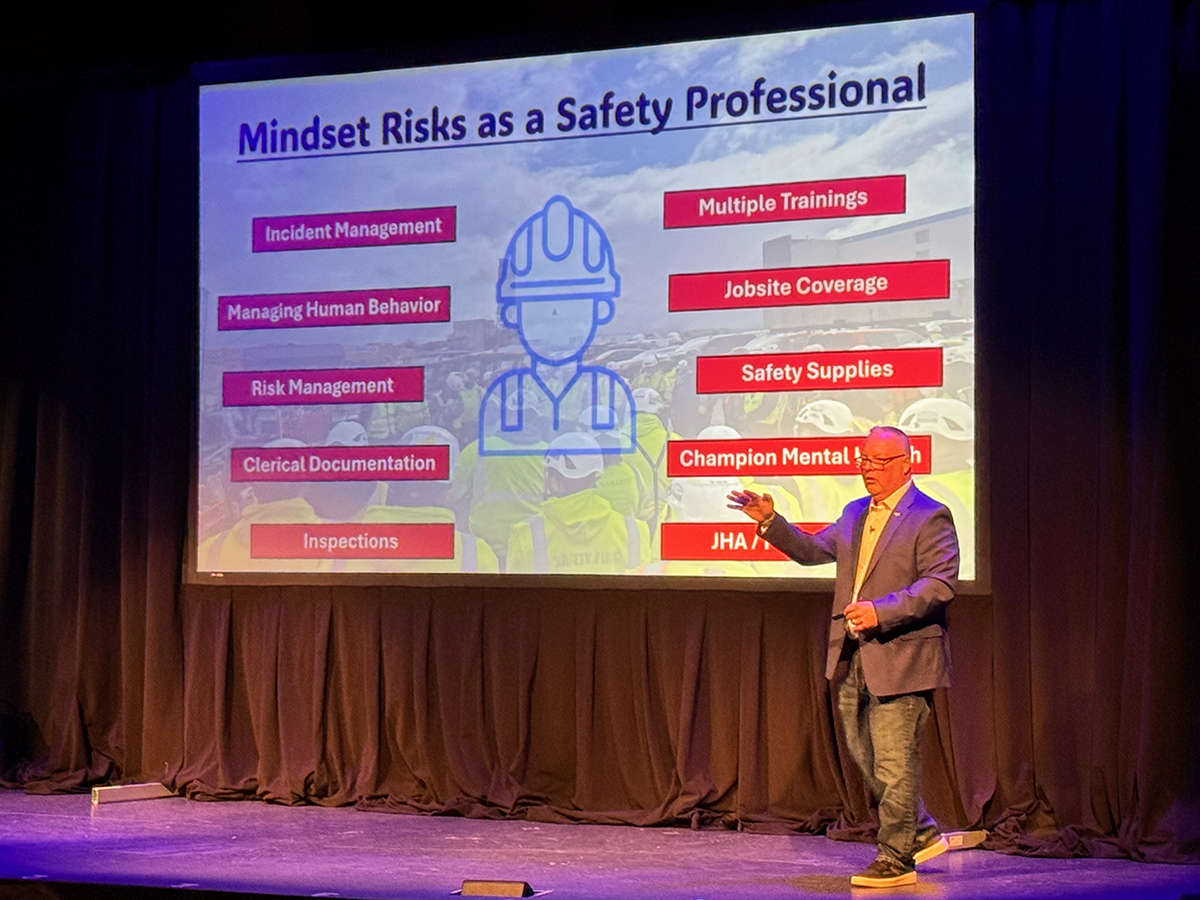
BURR RIDGE – At the 2026 Construction Expo & Safety Conference, hosted by the Associated Subcontractors Alliance (ASA) Chicago and the Construction Safety Council, keynote speaker Justin Azbill delivered a deeply personal call to action for the construction industry’s safety professionals.
His message was clear: Safety coordinators are more than just compliance officers — they are culture leaders. And to lead more effectively, they must prioritize something often overlooked in the industry — mental readiness.
Azbill opened by reframing the role of construction safety professionals. “Construction Safety Coordinators are what make construction go,” he said. “You influence people every day. You control the culture of your organization.” It was a powerful reminder for an industry where safety professionals are often viewed as an expense rather than an asset. Azbill challenged that notion directly, emphasizing that safety leaders don’t just prevent incidents — they shape behaviors, communication, and ultimately, outcomes.
With more than 30 years in construction, Azbill’s journey spans Union ironwork, firefighting, and executive leadership roles at major construction firms. Raised in a disciplined, working-class, Union and military family, he was taught resilience, sacrifice, and relentless work ethic. Those traits fueled his success — but they also led him to a breaking point.
During the COVID-19 pandemic, while serving in a high-level leadership role, Azbill faced extreme pressure: managing thousands of workers, navigating evolving safety protocols, and fielding constant demands from owners and executives. Long hours turned into near-constant workdays. Isolation, sleep deprivation, and stress followed. Eventually, he found himself in a mental health crisis — one he had never experienced before.
His story of nearly losing his life to suicide — and the moment his young daughter unknowingly intervened — left a profound impact on attendees. But Azbill didn’t share for shock value. He shared to break the silence surrounding mental health in construction.
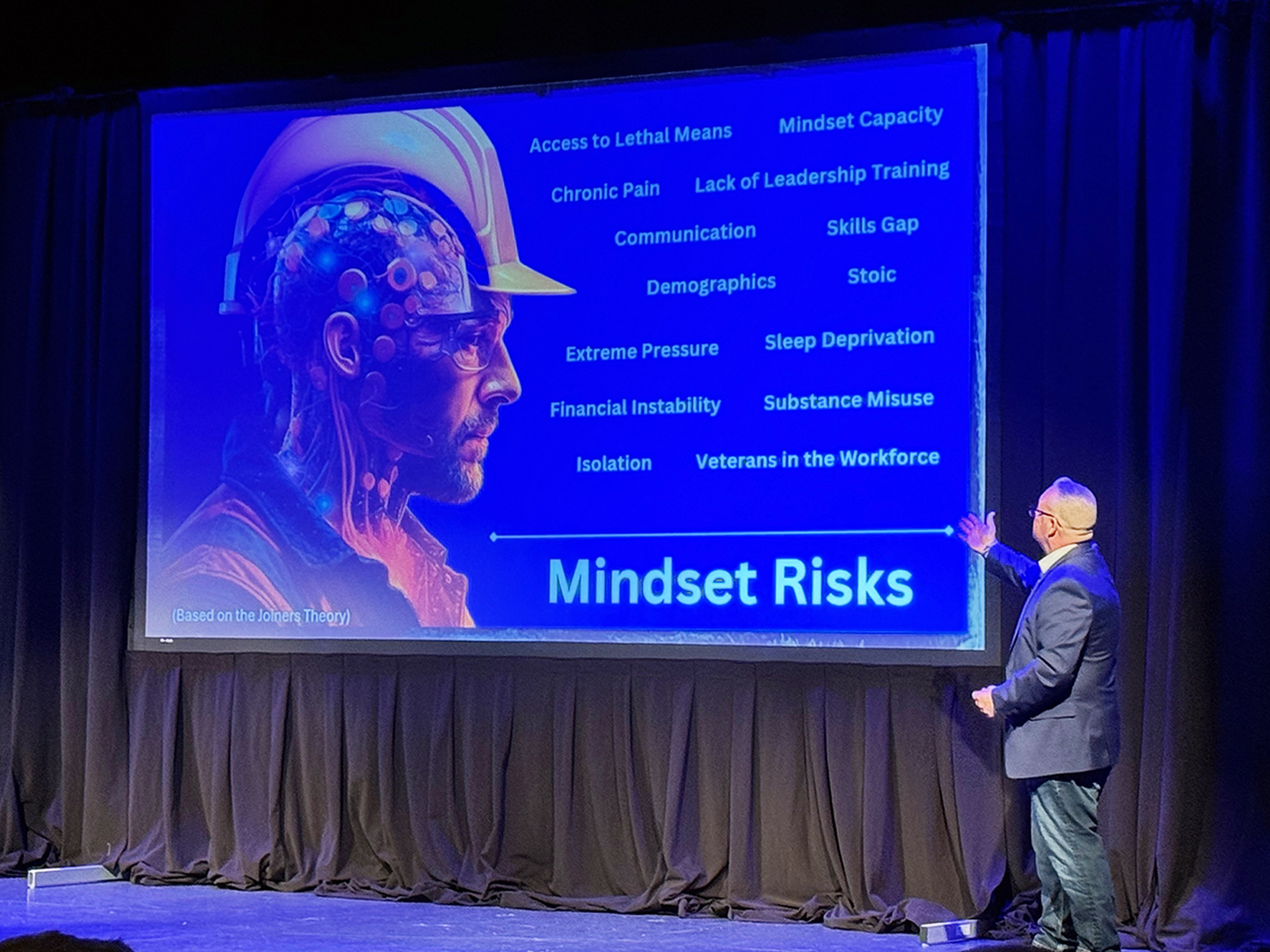
Azbill introduced what he calls the “invisible risks” facing the industry — factors that often go unaddressed but have real consequences:
• Extreme pressure
• Sleep deprivation
• Lack of leadership training
• Communication gaps
• Chronic pain
• Substance misuse
• Mindset capacity
“These are risks just like any physical hazard on a jobsite,” Azbill explained. “But we’re not talking about them.”
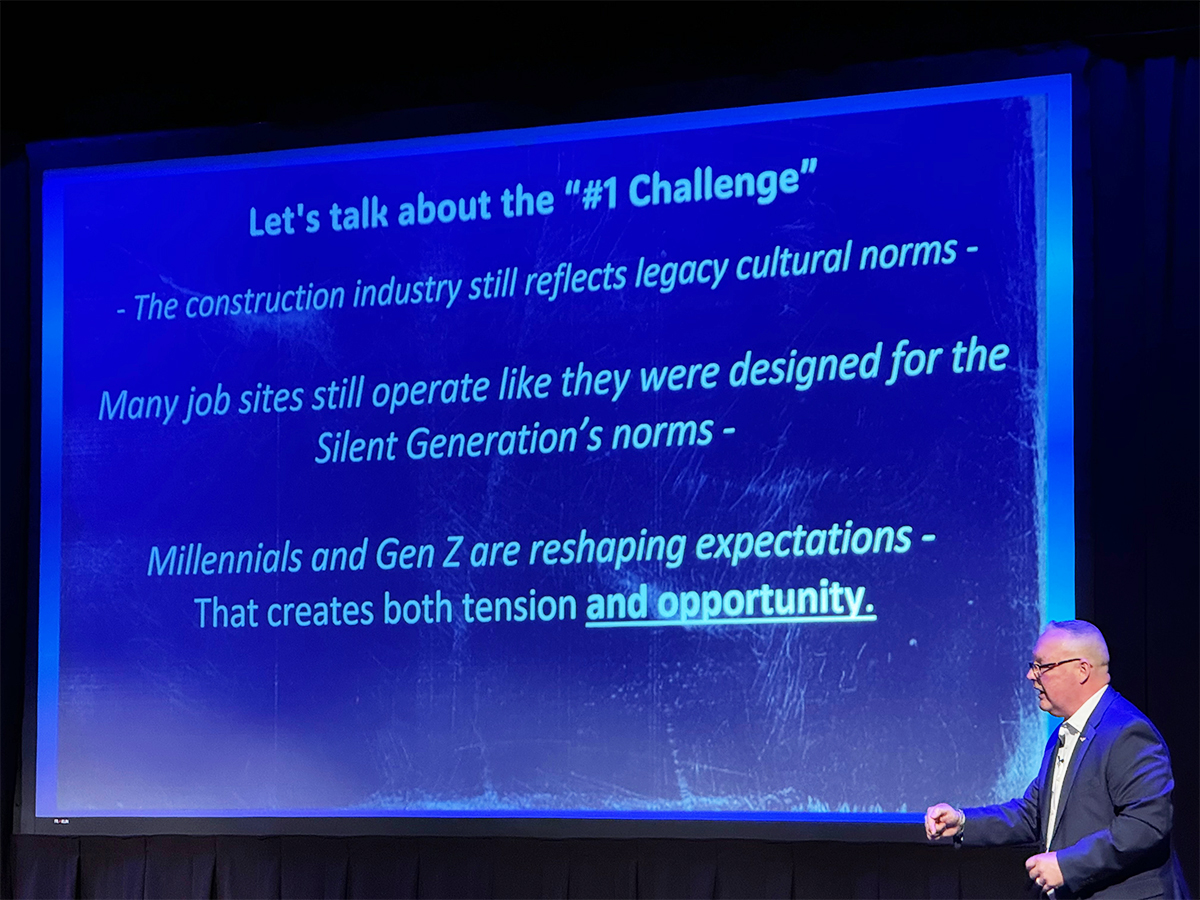
For safety professionals, the challenge is even greater. They are tasked with influencing behavior without direct authority, managing compliance in high-pressure environments, and often carrying the blame when things go wrong. “That pressure will mold your mindset if you let it,” he warned.
At the core of Azbill’s message is the concept of mindset readiness — the idea that mental preparedness is just as critical as physical safety planning. Just as jobsites require safety protocols, Azbill argues that individuals and organizations need mental health strategies. His approach is practical and actionable:
• Develop a personal crisis plan
• Identify five activities that reset your mindset (e.g., walking, journaling, meditation)
• Build a trusted support network
• Create space for honest conversations
Azbill emphasized that connection — not correction, is often the most powerful tool. “Neuroscience proves it only takes eight minutes to make someone feel better,” he said. “You don’t have to fix their problems. Just listen,” he added.
One of the most transformative ideas Azbill shared is that vulnerability is not weakness — it’s leadership. In an industry historically shaped by a “tough it out” mentality, he challenged safety professionals to lead differently. “When you open yourself up, you open a channel of communication you’ve never had before,” he said. “People will follow you because they see you’re real.”
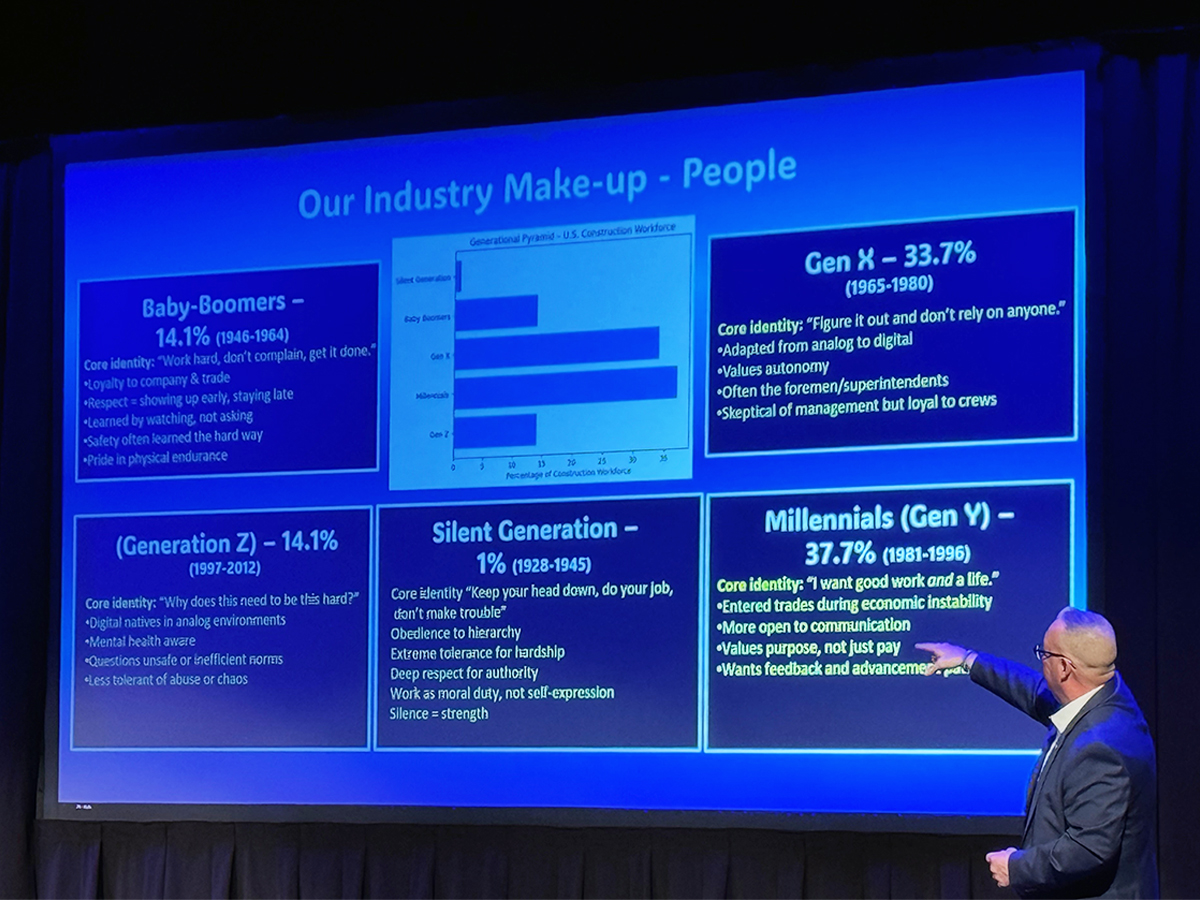
This shift is especially critical as the construction workforce evolves. With younger generations placing greater value on purpose, communication, and work-life balance, safety leaders must adapt their approach. Azbill’s message ultimately expands the definition of safety. It’s not just about hard hats, harnesses, and hazard recognition — it’s about people, their stress, their pressures, and their lives outside the jobsite. He argued that safety professionals are uniquely positioned to make an impact. “You are the most important person in your organization,” Azbill said. “Whether your company tells you that or not.”
For Union contractors and safety professionals across the CISCO network, Azbill’s keynote reinforces a critical truth: Improving safety performance requires more than policies and procedures — it requires a shift in mindset.
By embracing mindset readiness, fostering open communication, and recognizing the human side of the workforce, safety leaders can not only prevent incidents — but save lives in ways that extend far beyond the jobsite.