
Chicago Fire stadium project opens doors for subcontractors, showcases industry collaboration
April 13, 2026
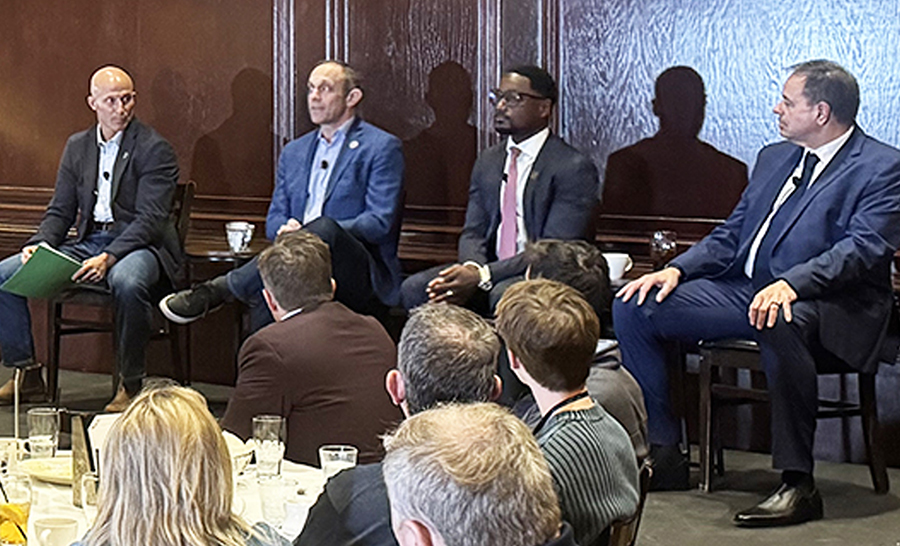
BURR RIDGE – At an April 8 Chicago Building Congress luncheon, leaders behind the highly anticipated Chicago Fire FC stadium project pulled back the curtain on one of the city’s most significant developments — and made one thing clear: Opportunity is on the table for subcontractors ready to step up.
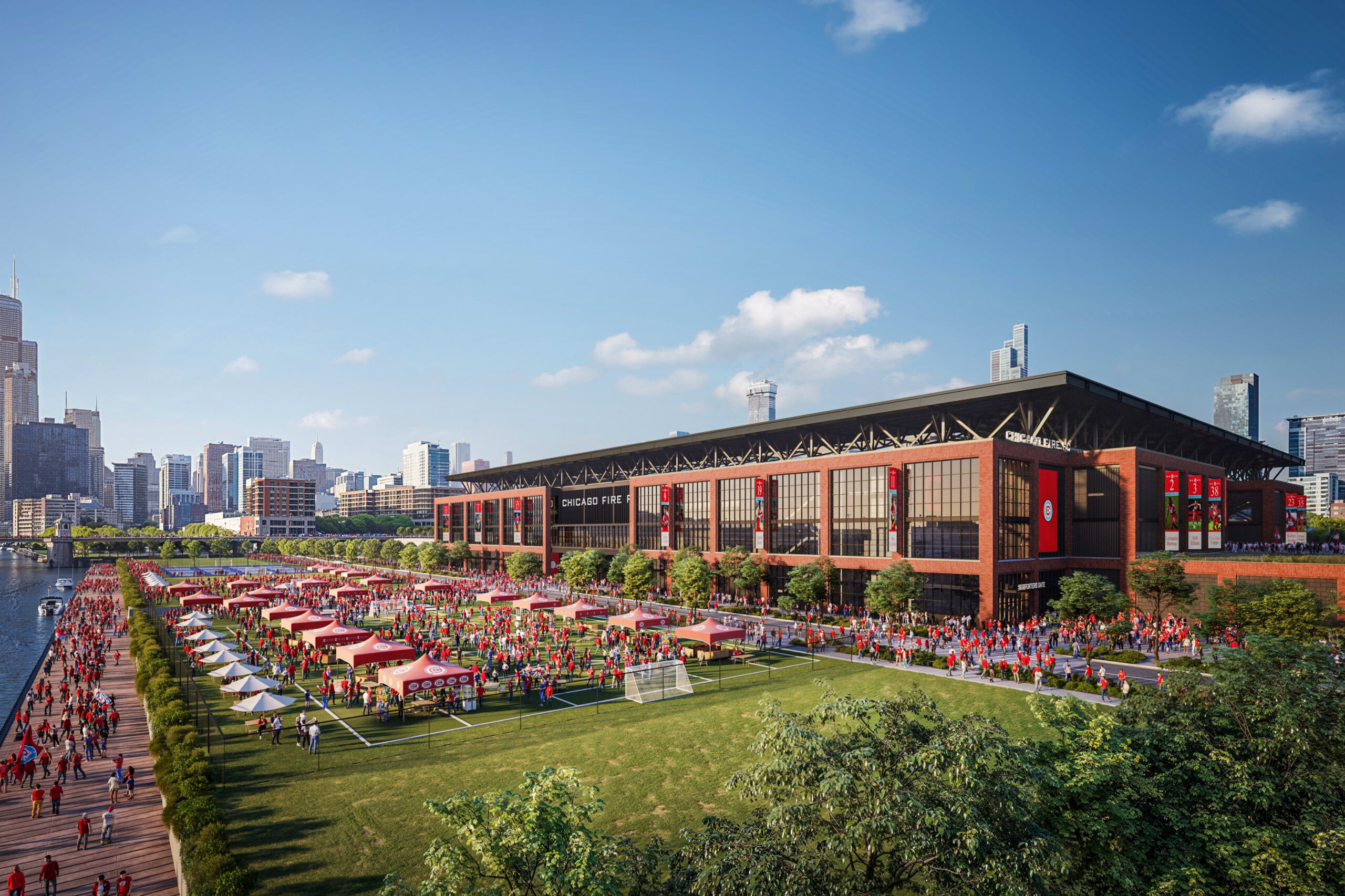
The $650–$750 million stadium, led by owner Joe Mansueto and rising at The 78, represents more than a new home for Major League Soccer — it is a massive undertaking built on collaboration, speed, and inclusivity.
Panelist participant Mansueto Office Head of Real Estate Ari Glass detailed how the project evolved from Mansueto’s vision to create a true “Chicago club.” After developing the Endeavor Health Performance Center, the team quickly pivoted to identifying a stadium site within city limits, ultimately landing on The 78.
The accelerated timeline required a nontraditional approach — building while designing — made possible through trusted partnerships and decisive leadership.
The stadium is being constructed by a tri-venture team including Pepper Construction, GMA Construction Group, and ALL Construction Group.
GMA President and CEO Cornelius Griggs emphasized that delivering a project of this scale requires more than just a general contractor.
“It’s about the hundreds of workers — and the subcontractors — who will ultimately bring this stadium to life,” Griggs said. “We want those teams to reflect the diversity of Chicago and create opportunities across all communities.”

Balancing workforce demands, subcontractor capacity, and tight timelines remains a central challenge — especially in a market already stretched by competing megaprojects like O’Hare expansion work and new developments across the city. For subcontractors in attendance, the panel delivered a direct message: there is room to participate — but preparation and partnership are key.
Panelist moderator Rob Martinelli explained the project will be divided into manageable bid packages, including suites, concourses, and other stadium zones. While not every firm can take on large contracts individually, smaller contractors are encouraged to collaborate.
“If you think a package is too big, it’s probably not,” Martinelli explained. “We’re breaking the job into segments, and we want firms to partner and pursue those opportunities.”
Interested subcontractors will be able to access bid information and submit interest through upcoming procurement documents and outreach efforts — including QR code registration distributed at the event.
ALL Construction Group President Luis Puig reinforced the importance of collaboration. “Don’t be afraid to partner,” Puig said. “Every trade will include smaller contractors working together. That’s how we build capacity and create opportunity.”
Puig also highlighted the role of Union Labor and Apprentices, noting the project will provide hands-on experience for the next generation of skilled trades workers.
Despite strong demand for construction, panelists agreed the biggest challenge facing the industry is workforce availability — not lack of work. Griggs noted firms are competing for talent across multiple booming sectors, including data centers, aviation, and infrastructure projects. Rising material costs and global economic pressures add further complexity.
Still, large-scale developments like the Chicago Fire stadium are seen as critical drivers for economic growth and future investment in the region. Beyond construction, the project is expected to transform The 78 into a vibrant hub featuring residential, retail, and entertainment space — while connecting neighborhoods like Pilsen and Chinatown more closely to downtown. Plans also include utilizing the Chicago River as a transportation and community asset, reinforcing the development’s long-term vision.
For subcontractors looking to get involved, the path forward is clear:
- Monitor upcoming bid package releases
- Be prepared to demonstrate workforce capacity
- Seek strategic partnerships
- Align with the project’s goals of diversity and inclusion
As Martinelli noted, landing a role on a project of this magnitude often starts small. “Sometimes it begins with a $1.5 million job,” he said. “You say ‘yes’ — and that leads to the next opportunity.”